
66fe883f-bb7b-4ffa-a1ff-f6b4ec5a7df6.webp


Flowers arrive with color, softness, and a message people recognize right away. A candle arrives more quietly. It asks for a moment: a match struck, a room made still, a name remembered. When choosing a memorial candle vs flowers, the question is rarely which gift is better. It is which kind of care fits this loss, this person, and this particular day.
Grief does not follow a tidy schedule. Some gestures are most helpful in the first stunned days. Others matter more after the calls stop, the casseroles are gone, and everyone else has returned to ordinary life. Flowers and memorial candles can both be meaningful. They simply offer different forms of comfort.
What flowers say in the immediate moment
Flowers have a place because they speak before words are available. They can fill a funeral home, a church, a dining table, or the quiet corner of a living room with a visible sign that someone is being held in thought. For a funeral or memorial service, they are often practical as well as beautiful. They honor the person who died in a shared, public space.
A floral arrangement also carries little pressure for the recipient. It can be delivered without asking them to respond, display it, or find the right words. In the first days of loss, that simplicity matters.
There is tenderness in the fact that flowers do not last. Their brief life can feel honest beside a death that has made time feel strange. But their impermanence is also the trade-off. After several days, the arrangement fades. It may leave behind a vase, a card, and the memory of who sent it, but not always an object the grieving person can return to when the next hard day comes.
What a memorial candle offers after the service
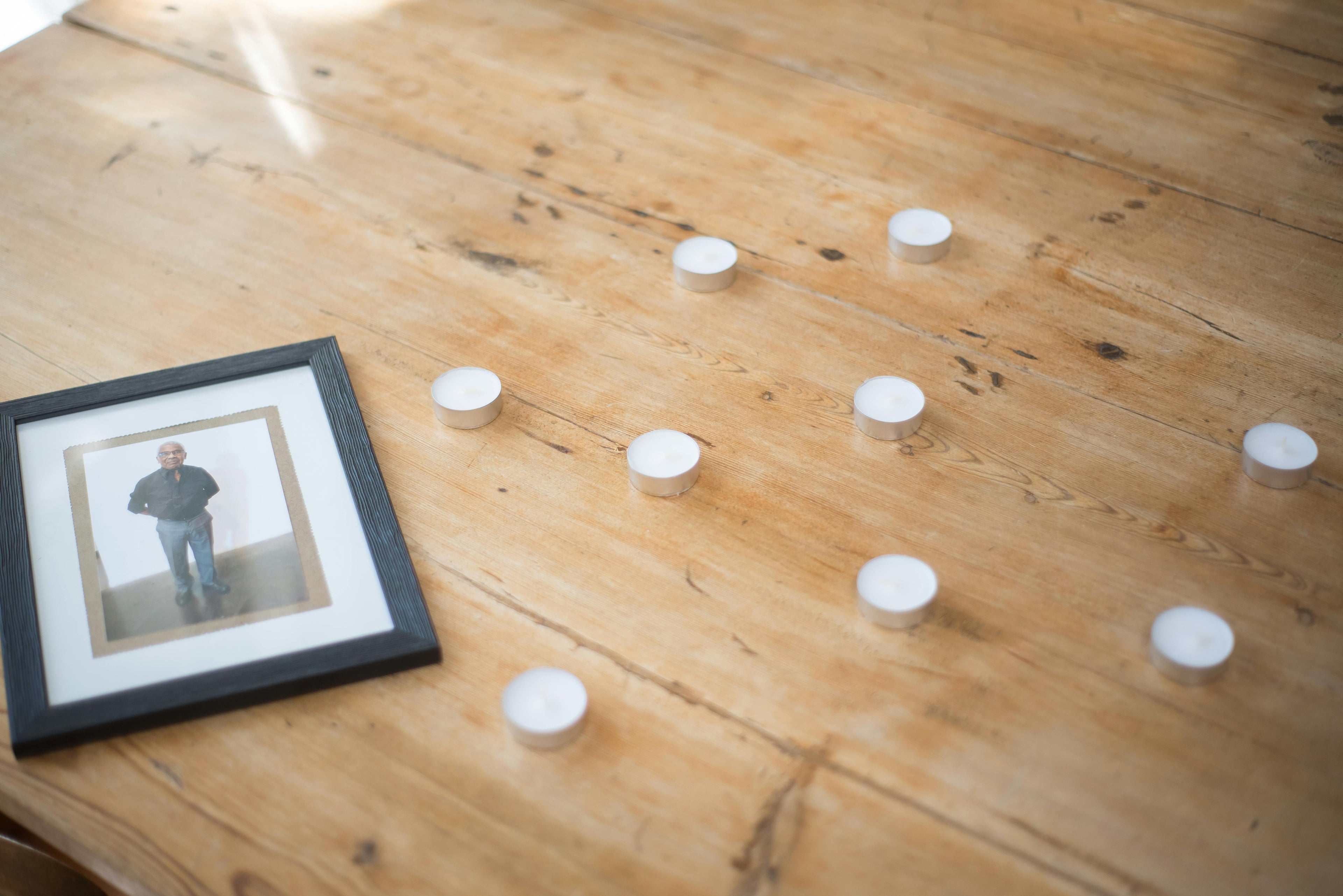
A memorial candle is less about decoration and more about return. It creates a small, repeatable action for a heavy feeling. Someone can light it on a birthday, an anniversary, a holiday, Sunday morning, or a night when missing them has arrived without warning.
That ritual does not need to be elaborate. The person grieving may sit beside the flame, say a name aloud, play a song, look through photographs, or simply breathe for a few minutes. The candle gives the feeling somewhere to go. It does not solve grief. It makes room for it.
This is why personalization can matter. A name, a relationship, or a short message can turn a candle into a keepsake that belongs to one person and one story. It feels less like a generic sympathy item and more like a quiet acknowledgment: this person was here, and they are still loved.
Unlike flowers, a candle can remain useful beyond the first week. Its presence on a shelf or bedside table can offer gentle permission to remember. For many people, the hardest part of grief is not only the loss itself. It is the fear that life moving forward will mean leaving the person behind. A ritual object can be a way of carrying them forward instead.
Memorial candle vs flowers: the choice depends on timing
If you are deciding what to send, begin with the moment rather than the product. A funeral service, a first week at home, and the first birthday after a death ask for different kinds of care.
Flowers are often a natural choice for a service, especially when you know the family is receiving arrangements or when you want to contribute to the atmosphere of the gathering. They are immediate, familiar, and communal. For someone you do not know closely, flowers can be a respectful gesture that does not presume intimacy.
A memorial candle may be especially fitting after the service, when grief becomes less visible to other people but no less present for the person living through it. It can also be a thoughtful choice for an anniversary, a holiday, or a sympathy gift sent weeks or months later. Those are the moments when a message that says “I still remember” can land with unusual depth.
The relationship matters, too. If you are close to the bereaved person, you may know details that make a personalized candle feel right: the name they used for their dad, a private phrase, or the date that will be especially difficult. If you are unsure, a simple candle with a sincere card can still offer comfort without trying to say too much.
Consider the person receiving it
Not everyone finds ritual comforting in the same way. Some people love the idea of lighting a candle and making a pause in their day. Others may be overwhelmed by objects in the early stages of grief, or they may not use candles because of children, pets, scent sensitivities, or home safety concerns.
That does not make the gesture wrong. It means the most thoughtful gift is one that considers the life they are returning to. An unscented or lightly scented option may feel more usable for some people. For others, flowers may be the better choice because they require no ongoing decision or care.
Faith and culture can shape the answer as well. Candles hold meaning in many religious and cultural traditions, while flowers may be central to others. When you know a family’s customs, follow them. When you do not, keep the gesture simple and let your message carry the warmth.
A short note can make either gift more personal: “I have been thinking about your mom today.” “I hope this gives you a small moment of peace.” “There is no need to reply. I just wanted you to know I remember him.” The best sympathy language does not try to explain loss away. It stays close.
When giving both makes sense
Sometimes the choice is not either-or. Flowers can honor the public moment of a funeral, while a memorial candle can support the private days that follow. Together, they acknowledge two truths: the loss is shared, and the grief is deeply personal.
This pairing can be especially meaningful when several people are contributing. A group may send flowers to the service, while a close friend or family member gives a candle directly to the person most affected. The candle does not need to compete with the flowers. It can begin where they end.
For funeral homes and memorial professionals, the distinction is useful, too. Floral tributes help shape the service itself. A personalized remembrance candle can offer families something to take home, a tangible object for the days when the formal rituals have passed.
A gift does not need to be perfect to be meaningful
People often hesitate because grief feels too large for any object. That instinct is understandable. No arrangement, candle, card, or sentence can make a devastating loss smaller.
But a sympathy gift is not a solution. It is a sign of witness. It says that the person who died mattered, and that the person grieving does not have to carry their absence without being seen.
Afterlights was created around that quieter kind of support: handmade candles intended not merely to scent a room, but to become part of a remembrance practice. Still, the ritual belongs to the person lighting it. There is no right way to use it, and no schedule for when they should feel better.
If flowers feel right, send flowers. If a candle feels more lasting, send a candle. If you are still unsure, let care be your guide. The most meaningful gesture is often the one that makes space for someone to miss the person they love, without asking them to move past that love too quickly.