
719cffac-dc2f-4de8-ae0f-4bc9987aaf6e-1778857868056.webp


A funeral asks a lot of the people in the room. It asks them to show up while tired, stunned, heartbroken, or still trying to understand what happened. In that kind of atmosphere, memorial candles for funeral services can offer something simple and steady - a small action that gives grief somewhere to go.
The candle itself is not the point. The ritual is. Lighting a flame during a service, placing it beside a photo, or inviting family members to gather around it creates a moment of attention. It gives form to remembrance when words are hard to find.
Why memorial candles for funeral rituals matter
Grief often feels abstract until it meets an object, a place, or a repeated action. That is part of why candle rituals have stayed with people across cultures and generations. A flame is brief, visible, and tender. It asks nothing dramatic from the mourner. It simply burns, and in doing so, it marks the moment.
At a funeral, that kind of symbol can be especially grounding. Services move quickly. There are decisions to make, people to greet, details to manage. Families may feel pressure to speak clearly, choose the right readings, or hold themselves together in public. A memorial candle changes the rhythm. It introduces pause.
For some families, that pause becomes the emotional center of the service. A spouse lights the candle before the first reading. Children come forward one at a time. A room stands in silence for thirty seconds while the flame is lit. None of this erases grief. It gives grief a container.
That is the quiet value of ritual. It does not solve the pain. It makes space for it.
Choosing the right memorial candle for a funeral
Not every funeral needs the same kind of candle. Some services are traditional and formal. Others are intimate, modern, or held outside a religious setting. The best choice depends on the tone of the gathering and what the family wants the candle to do.
If the candle is meant to be part of the ceremony itself, visibility matters. It should feel intentional in the room, easy to light, and stable enough to remain in place during the service. A candle that is too small can disappear. One that is overly decorative can pull attention away from the purpose.
If the candle is meant to become a keepsake after the funeral, personalization may matter more. The name of the person who died, important dates, or a short phrase can turn the object into something the family returns to later - on birthdays, holidays, Sundays, or the anniversary of the loss.
Scent is another decision worth making carefully. Some people find fragrance comforting because scent connects quickly to memory. Others prefer an unscented candle at a funeral, especially in shared indoor spaces where guests may be sensitive. There is no single right answer here. It depends on the setting and on the people grieving.
Material also matters more than many people expect. A handmade soy candle tends to burn more cleanly and feel more substantial as a keepsake. That may sound like a small detail, but grief often sharpens our sense of what feels sincere and what feels generic. When something is meant to carry memory, quality is not just aesthetic. It becomes part of the meaning.
How candles are used during funeral services
Some families know exactly what they want. Others only know they want the service to feel personal. A memorial candle can support both.
One common approach is a single central candle. This works well when the service needs one clear symbolic moment. The officiant or a close family member lights it near the beginning, and the candle remains lit throughout the gathering. Its role is simple but powerful: it represents the presence of the person being honored, and the love that continues after death.
Another approach is a family lighting ritual. In this version, several people light smaller candles from one main flame. This can be moving in services where participation matters more than formality. The gesture carries its own meaning. Grief is shared, memory is passed from one person to another, and mourning becomes visible without requiring a speech.
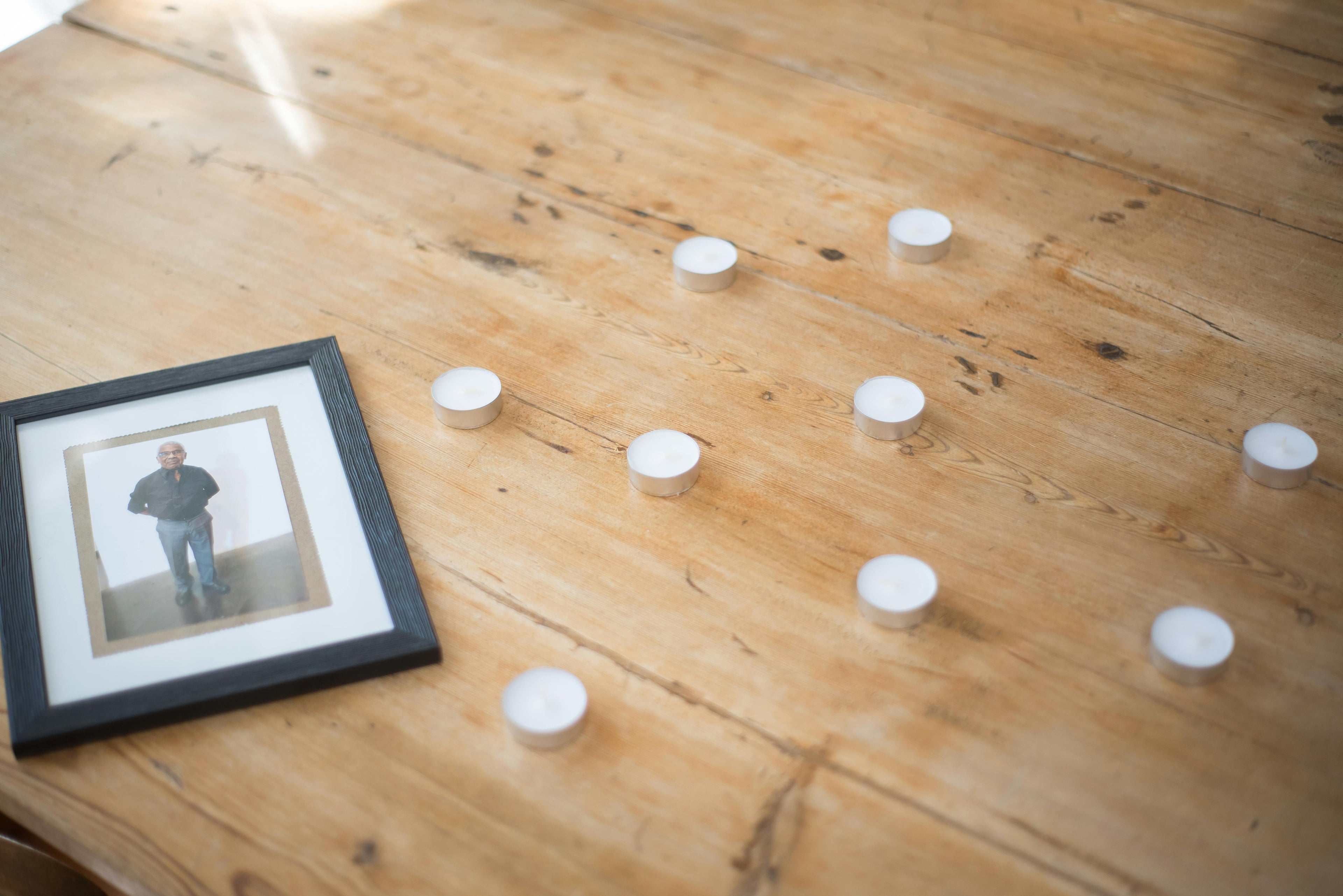
Some funeral homes include a remembrance table with photographs, flowers, letters, or meaningful objects from the person’s life. In that setting, the candle becomes part of a larger story. It does not need to carry all the symbolism on its own. It works alongside the other elements, creating a focal point that feels alive and present.
There are also services where the candle is not lit publicly at all. Instead, it is placed near the casket, the urn, or the guest book, and later taken home by the family. This can be the better choice when privacy matters, when open flame is restricted, or when the family wants the ritual to continue after everyone else leaves.
When a funeral candle becomes more than a funeral object
One of the hardest parts of loss is that support often fades after the service. Food stops arriving. Messages slow down. People go back to their lives. The grief does not.
That is why memorial candles for funeral use often matter most after the funeral is over. The same candle, or one made in that spirit, can become part of private mourning at home. A person lights it on the first holiday without their dad. A mother lights it on her child’s birthday. A partner lights it at the end of a long workday because the house feels too quiet.
This is where the candle stops being event-based and becomes relational. It is no longer only for the funeral. It becomes part of how someone stays connected.
Modern grief often asks people to invent their own rituals. Many adults do not have a strong inherited mourning practice, or they are carrying loss in ways that do not fit neatly into public tradition. A candle helps because it is both structured and flexible. You can light it at the same time every year, or only when the ache feels close. You can sit in silence, say a name out loud, pray, write, or do nothing at all.
Afterlights was built around that understanding: that remembrance objects can support grief not by decorating it, but by giving it a repeatable form.
What to look for if you are buying one for someone else
Buying for a grieving person can feel delicate. Most people are not afraid of getting the item wrong. They are afraid of making the moment feel smaller, stranger, or more commercial than it already does.
A memorial candle is often a thoughtful gift because it does not demand a response. It does not ask the recipient to display cheerfulness or send an update. It simply offers a ritual they can use when they are ready.
Still, the details matter. Personalization can feel deeply caring when you know the person well, but it may feel too intimate if your relationship is more distant. A label that names the person who died can be beautiful. So can a quieter design that leaves space for private meaning. The best choice depends on how close you are and what kind of grief language the recipient tends to welcome.
It also helps to think beyond the day of the funeral. Flowers are immediate and fleeting. A candle can accompany the weeks after, when grief often becomes less visible to everyone else and more real to the person living inside it.
A quiet role in modern funerals
Funerals are changing. Some remain deeply traditional. Others blend religion, family customs, secular readings, music, and informal remembrance. None of that makes grief lighter. It simply means people are looking for forms that feel honest.
A memorial candle fits naturally into that shift because it does not require a specific doctrine to be meaningful. It can sit inside many kinds of services. It can be sacred, cultural, personal, or simply human.
That flexibility is not a weakness. It is part of why the ritual lasts. When someone dies, people need more than logistics. They need one thing to hold onto, one gesture that feels real, one visible sign that love is still here even when the person is not.
Sometimes that sign is a flame.
If you are choosing a candle for a funeral, it does not need to carry the whole weight of the day. It only needs to help create one honest moment of remembrance. Often, that is enough.