
f942159b-9f0c-4c5e-90fe-27417ee838d0.webp


Some days grief asks for more than thought. It asks for a small action. If you are wondering how to use memorial candles, the answer is not about getting it right. It is about creating a repeatable moment that helps you feel close to the person you miss.
A memorial candle is not just decor with a softer purpose. It can become a marker of time, a quiet companion on hard dates, or a way to say, I am still carrying you with me. That matters because grief often has no clear shape. Ritual gives it one.
How to use memorial candles in everyday grief
The simplest way to begin is to choose a moment and let the candle hold it. You might light it every Sunday morning, on your dad's birthday, after dinner on the anniversary of a loss, or when a wave of grief arrives without warning. The act itself is small, but small acts are often what make grief bearable.
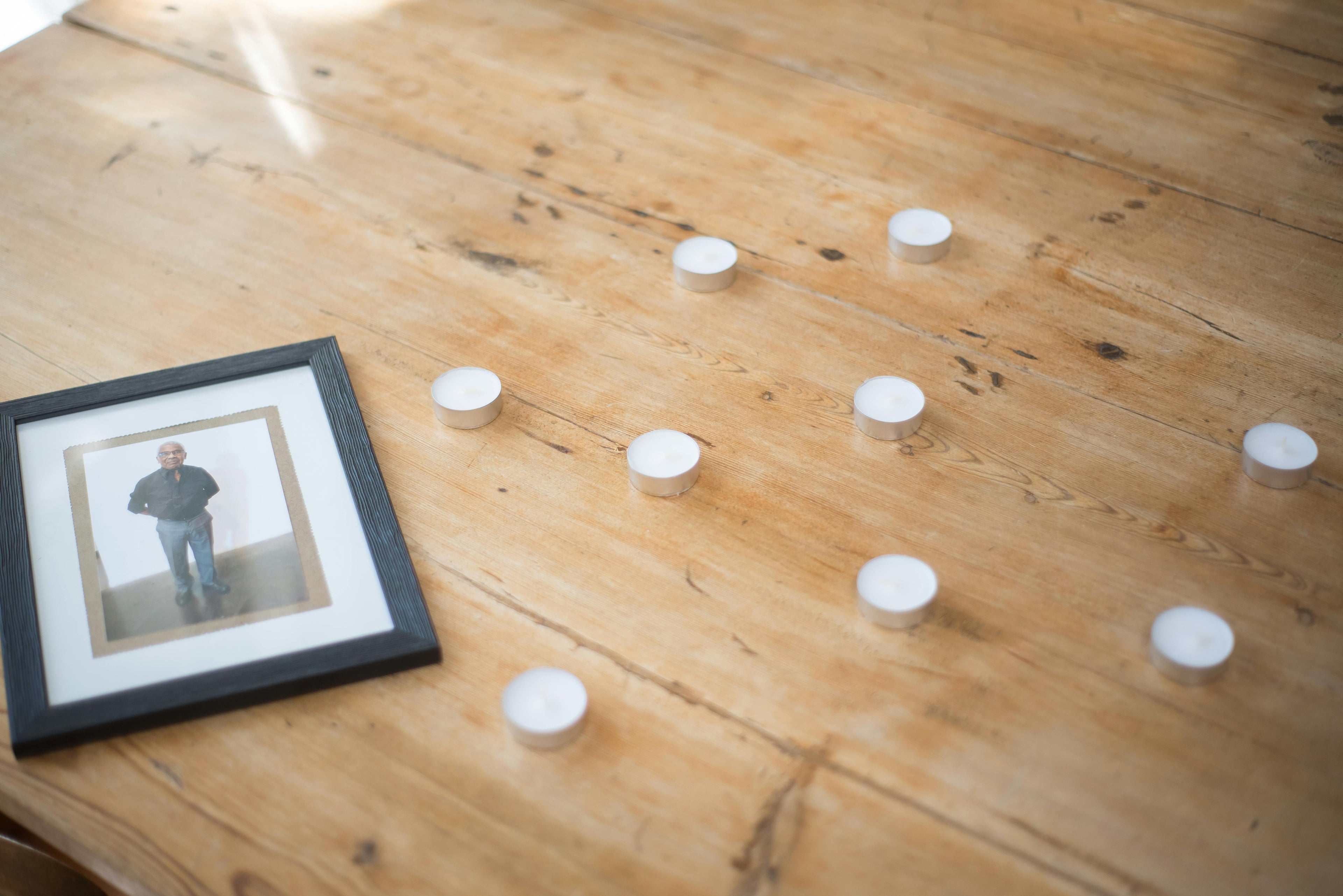
Some people use a memorial candle as part of a dedicated ritual. They sit quietly for a few minutes, look at a photo, speak a name out loud, or write a few lines in a journal. Others keep it less structured. They light the candle while making coffee, folding laundry, or listening to a song their person loved. There is no single correct format. What matters is that the ritual feels honest enough to repeat.
That repeatability is important. Grief can make time feel strange - too fast in some seasons, frozen in others. Lighting a candle on purpose creates a rhythm. It helps the body recognize, This is a moment for remembering.
Start with a purpose, not a performance
A lot of people hesitate because they worry a ritual needs to be profound. It doesn't. In fact, the most useful memorial rituals are often the least elaborate.
Before lighting the candle, ask yourself a simple question: what is this moment for? Maybe it is for remembering your mom's laugh. Maybe it is for surviving a hard evening. Maybe it is for including your partner in a milestone they should have been here for. A clear purpose gives the ritual weight without making it complicated.
You may also notice that your purpose changes. Early grief often asks for raw acknowledgment. Later grief may ask for continuity, comfort, or a way to include someone in family life after their death. The candle can hold all of that. It does not need to mean the same thing forever.
When memorial candles can be most helpful
There are obvious times to light a remembrance candle, like funerals, wakes, birthdays, death anniversaries, and holidays. Those moments already carry emotional charge, and a candle can make them feel less uncontained.
But memorial candles are often just as helpful on ordinary days. A random Tuesday can be harder than the anniversary. A child may ask a question at bedtime. A song in the grocery store can shift the whole day. Lighting a candle in response to those moments can offer a little structure when grief feels sudden and uninvited.
This is one of the quiet strengths of ritual objects. They give you something to do when language is not available. Not because action fixes grief, but because action can steady it.
Create a ritual that fits your relationship
The most meaningful memorial rituals usually reflect the actual person being remembered. If your friend loved slow mornings, you might light the candle with coffee and sit in silence before the day begins. If your child loved bedtime stories, you might light it before reading one of their favorites. If your partner was part of every holiday tradition, the candle might come out at the table, even years later.
Personalization matters because grief is relational. You are not honoring loss in the abstract. You are honoring one specific bond.
That is also why some people prefer a candle made for a particular relationship rather than a generic sympathy object. A memorial candle for a dad may feel different than one for a spouse or child, not because grief can be ranked, but because each relationship leaves a different shape in daily life. Afterlights understands that difference and treats the candle as part of a ritual, not just a product.
How to use memorial candles with family or at a service
A memorial candle can be private, but it can also help hold a shared room. At a funeral or celebration of life, it often serves as a visual center - something steady while stories, tears, and silence move around it.
In family settings, the candle can create a gentle invitation without forcing conversation. You might light it before a meal and leave space for anyone who wants to share a memory. You might place it beside photographs during a birthday gathering. With children, a candle can offer a simple way to participate in remembrance when abstract explanations are too much. They may want to say a name, draw a picture, or sit quietly nearby.
The trade-off is that shared rituals can bring up different grief styles. One person may want silence. Another may want to talk. One may find the candle comforting, while someone else may find it difficult. That does not mean the ritual failed. It means grief rarely looks the same across a family. Keep the structure loose enough that people can join in their own way.
Let the candle mark time
One of the hardest parts of loss is that the world keeps moving. Bills get paid. Seasons change. People text about ordinary things. Meanwhile, grief can feel outside the calendar.
A memorial candle can help bridge that gap. Light it at the start of each month. On Sundays. At sunset. On the first snowfall. On the day your loved one would have turned 60. These repeated moments create a living calendar of remembrance.
This can be especially grounding in the second year of grief and beyond, when outside support often fades. The ritual remains. Not as a way to stay stuck, but as a way to continue the relationship in a form that is possible now.
Keep the ritual simple enough to return to
A memorial practice only helps if you can actually use it. That is why simple is usually better than elaborate. If the ritual requires perfect timing, a clear mind, and emotional energy you rarely have, it may end up becoming another thing you avoid.
Try this instead. Light the candle. Take one full breath. Say their name, either out loud or in your head. Stay for a minute or stay for twenty. Then blow it out when the moment feels complete.
That may be enough.
You can always add more over time. A written note. A playlist. A favorite meal. A prayer. A few minutes of silence at the end of the day. But let the candle be the anchor, not the test.
What memorial candles cannot do
It helps to say this clearly. A candle will not resolve grief. It will not make a death feel acceptable. It will not replace support, community, therapy, faith, or time.
What it can do is give shape to love that still needs somewhere to go. It can offer a small, physical practice on days when grief feels abstract or too large to name. It can remind you that remembrance does not have to be dramatic to be real.
That is often enough to matter.
How to choose the right moment to light one
If you are still unsure how to use memorial candles, start by paying attention to when you already reach for your person's memory. Maybe it happens in the kitchen. In the car. At dusk. During milestones. Grief leaves patterns, even when they are subtle.
Choose one of those moments and let the candle meet you there. You do not need a ceremony. You need a practice you can come back to when the day is heavy, when the house is quiet, or when love feels like it has nowhere visible to land.
Sometimes that is all a memorial candle is meant to be - a small flame, a chosen pause, and a way to remember with your whole body, not just your thoughts.
If it helps, let that be enough for now.